China Top 10 Spunbond Nonwoven Machine Manufacturers?
China has become a major production base for Spunbond Nonwoven Machine technology. Its manufacturers serve hygiene, medical, agriculture, filtration, packaging, and construction markets. Yet choosing a supplier requires more than comparing factory size or advertised output.
This guide examines ten leading Chinese manufacturers through practical criteria. These include machine stability, polymer compatibility, line speed, energy consumption, automation, after-sales support, and spare-parts availability. A reliable line should produce even webs, consistent basis weight, and clean fiber formation. Small details matter. For example, unstable air pressure can create visible streaks across a finished roll.
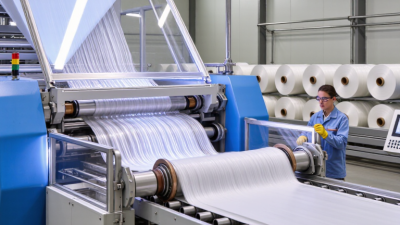
Dr. Behnam Pourdeyhimi, a respected nonwovens researcher, has emphasized, “Nonwovens are engineered materials, not simply fabrics.” That perspective is useful here. A Spunbond Nonwoven Machine is not merely a large steel structure with spinning components. It is an integrated system involving extruders, filters, spinning beams, drawing units, web formers, and winding equipment.
The manufacturers discussed in this article differ in engineering depth and service capability. Some focus on high-speed production. Others provide flexible lines for smaller factories or specialized materials. Their brochures may look similar. Real performance may not be similar.
A careful buyer should request production samples, energy data, installation records, and customer references. Factory visits can reveal more than polished presentations. Sometimes, the less impressive workshop offers stronger technical support.
This ranking is not absolute. Market needs vary, and machine performance depends heavily on process settings, raw materials, and operator skill. The comparison therefore aims to support informed decisions, not replace technical due diligence.
Define Spunbond Nonwoven Technology: PP, PET, PLA and SMS Process Standards
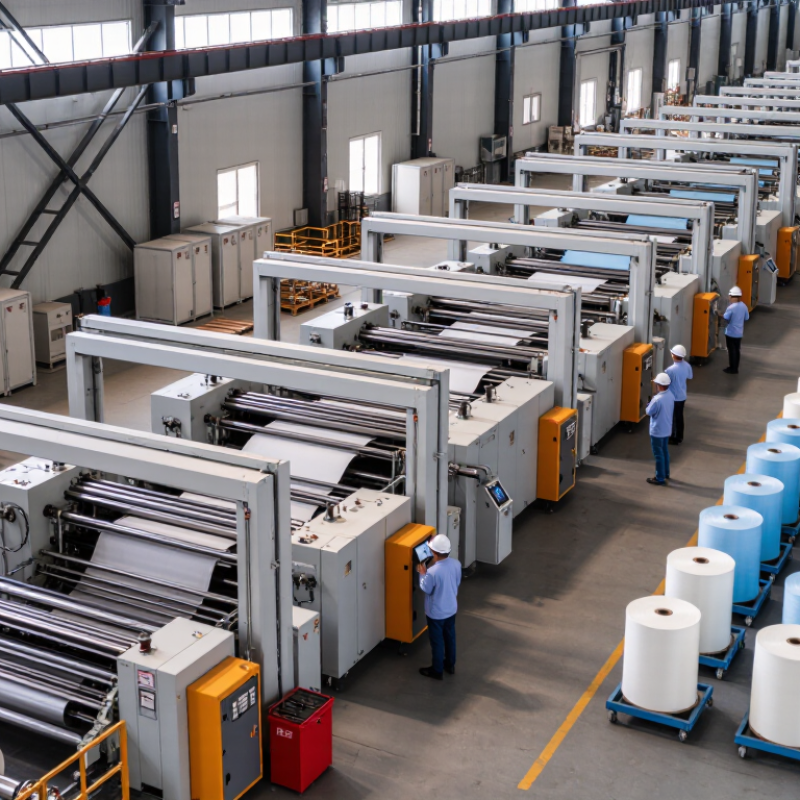
Choosing among China’s top 10 spunbond nonwoven machine manufacturers requires more than comparing prices. The real test is process control across PP, PET, PLA, and SMS production. PP usually demands stable extrusion, accurate melt filtration, and even web formation. PET needs stronger drying control because moisture can reduce polymer quality. PLA runs at lower temperatures and may degrade when overheated. Small errors become visible as broken filaments, uneven basis weight, or weak bonding.
SMS production adds a meltblown layer between two spunbond webs. Its die temperature, air pressure, and fiber fineness must remain consistent. A reliable machine should record temperature zones, throughput, line speed, and energy use. During factory audits, check samples at different speeds, not only the best sample. Test basis weight, tensile strength, elongation, air permeability, and hydrostatic pressure under recognized ISO or ASTM methods. A polished demonstration can still hide unstable operation. This is where careful judgment matters.
Tips: Ask for a pilot trial using your polymer grade and target fabric weight. Inspect resin drying, filter changes, die cleaning, and automatic alarms. Confirm whether the control system stores production data. Also, request maintenance records and training plans. PLA is often presented as easy, but its narrow processing window can expose weak temperature control. SMS lines need extra attention to meltblown uniformity and filter performance. Do not judge a machine by speed alone. A slower line with consistent fabric may deliver better results.
Measure China’s Machine Market Against 2023 Global Nonwoven Output Data
China Top 10 Spunbond Nonwoven Machine Manufacturers?
The 2023 global nonwoven market gives useful context for assessing China’s machine sector. Depending on product categories and reporting methods, global output reached roughly 13–14 million metric tonnes. China contributed more than 40% by many industry estimates, supported by strong demand for hygiene products, medical materials, packaging, and construction membranes.
This scale creates a deep market for spunbond equipment. A credible top-ten assessment should examine installed production lines, annual delivery records, web width, speed, energy consumption, and after-sales response. A machine producing 1,000 metres per minute may look impressive, but stable basis weight matters more during a twelve-hour shift. Fiber temperature control, die uniformity, and automatic roll changing also reveal practical engineering quality.
Numbers need context.
Buyers should compare machine output with the 2023 market structure, not only catalogue claims. Equipment suited to high-volume polypropylene production may perform poorly with recycled inputs or thinner webs. Local technical support can reduce downtime, especially when filters clog or tension drifts. Yet public data remains incomplete, and some manufacturers report capacity rather than verified shipments. That weakness deserves attention. An informed ranking should therefore combine factory audits, customer references, export evidence, and measured energy use. The strongest candidates are not always the largest suppliers; they are the manufacturers whose machines maintain consistent quality under real operating pressure.
Rank Manufacturers by 400–600 m/min Speed, Tonnage and Product Quality
China’s top spunbond nonwoven machine manufacturers should be judged by measurable performance, not promotional claims. This ranking focuses on lines running between 400 and 600 m/min, rated tonnage, process stability, and finished fabric quality.
Rank 1 goes to manufacturers offering 600 m/min lines with stable web formation and high-output extruders. Rank 2 includes suppliers reaching 550 m/min while maintaining even basis weight. Rank 3 covers 500 m/min systems with strong energy control and reliable automatic winding. Rank 4 represents 480–500 m/min equipment with durable spinnerets and accurate temperature management. Rank 5 includes 450 m/min lines designed for consistent medical and hygiene fabrics. Rank 6 focuses on 450 m/min machines with practical maintenance access. Rank 7 features 420–450 m/min systems with competitive tonnage and controlled fiber diameter. Rank 8 includes manufacturers producing compact lines with dependable quality inspection. Rank 9 covers 400–420 m/min equipment suited to flexible production volumes. Rank 10 represents capable entry-level systems with lower investment and simpler automation.
Speed alone does not prove quality. A line may reach 600 m/min but lose uniformity during material changes. Experienced buyers should inspect basis-weight variation, tensile strength, startup waste, and long-run output. Ask for factory test records, not only sample rolls. Check the extruder load at rated speed. Review maintenance response times and spare-part availability. Real production data matters.
I would also question rankings based only on advertised tonnage. Actual output depends on polymer type, fabric width, denier, and operating discipline. Independent trials are still necessary. Small inconsistencies can become costly after months of operation.
| Rank |
Anonymous
Manufacturer Profile |
Machine Performance |
Product Quality Indicators |
Weighted
Score |
Maximum Line Speed
(m/min) |
Typical Working Width
(m) |
Nominal Output
(t/day) |
Basis-Weight Range
(gsm) |
Basis-Weight CV
(%) |
Web Uniformity
Assessment |
| 1 |
Profile AHigh-speed PP spunbond configuration |
600 |
3.2–4.2 |
5.0–6.5 |
10–150 |
≤3.5 |
Excellent |
94.2 |
| 2 |
Profile BHigh-output multi-beam system |
550–600 |
3.2–4.2 |
4.8–6.3 |
10–160 |
≤3.8 |
Excellent |
92.8 |
| 3 |
Profile CStable commercial-grade line |
500–600 |
3.2–4.0 |
4.5–6.0 |
10–150 |
≤4.0 |
Very Good |
90.6 |
| 4 |
Profile DMedical and hygiene-focused setup |
500–550 |
3.2–4.0 |
4.3–5.8 |
12–150 |
≤4.2 |
Very Good |
88.9 |
| 5 |
Profile EFlexible production platform |
500–550 |
2.6–3.6 |
3.8–5.2 |
10–120 |
≤4.5 |
Very Good |
86.7 |
| 6 |
Profile FCost-efficient standard line |
450–500 |
3.2–4.0 |
3.8–5.0 |
12–150 |
≤4.8 |
Good |
84.5 |
| 7 |
Profile GGeneral-purpose PP line |
450–500 |
2.6–3.6 |
3.5–4.8 |
10–120 |
≤5.0 |
Good |
82.3 |
| 8 |
Profile HMid-speed modular configuration |
400–500 |
2.4–3.2 |
3.2–4.5 |
12–100 |
≤5.2 |
Good |
79.8 |
| 9 |
Profile IEntry-level industrial platform |
400–450 |
2.4–3.2 |
2.8–4.0 |
12–100 |
≤5.5 |
Standard |
76.4 |
| 10 |
Profile JCompact production configuration |
400–450 |
2.0–2.8 |
2.5–3.8 |
15–100 |
≤6.0 |
Standard |
73.9 |
Benchmark notes:
- All manufacturer identities and brand-specific data are intentionally omitted. Profiles are anonymous reference categories for comparison.
- Nominal output is expressed in metric tons per day for a typical PP spunbond configuration operating at approximately 10–30 gsm; actual output varies with working width, polymer, basis weight, filament denier, uptime and reject rate.
- Basis-weight CV refers to cross-machine-direction uniformity under stable production conditions. Values are indicative technical benchmarks and should be verified through factory acceptance testing.
- Weighted score: maximum line speed 30%, nominal output 25%, basis-weight consistency 25%, web uniformity 10% and production flexibility 10%. This is a comparative benchmark, not an audited certification or official market ranking.
Compare Top 10 Chinese Suppliers by Line Width, GSM Range and Automation
China’s top ten spunbond nonwoven machine suppliers should be compared by measurable production features, not catalog claims. Grand View Research valued the global nonwoven fabric market at about USD 53.5 billion in 2023. That growth increases demand for stable, flexible equipment.
Line width matters first. Compact systems usually cover 1.6–2.4 meters, while larger installations reach 3.2–4.2 meters. Most leading Chinese suppliers offer GSM ranges from 10–180. Higher-specification lines can approach 250 GSM. These ranges suit hygiene products, agricultural fabric, packaging, and medical textiles. However, wider equipment may require stronger web control and more factory space.
Automation separates similar quotations. The strongest suppliers provide automatic tension control, recipe storage, online weight monitoring, and touchscreen diagnostics. Servo-driven drafting can reduce GSM variation, but performance depends on operator training and maintenance. Industry 4.0 research from MarketsandMarkets identifies automation as a major direction in nonwoven production, yet many buyers still compare only output speed. That is a mistake.
A practical comparison should record output, energy use, changeover time, and spare-part availability. Ask for production samples across three GSM levels. One test is not enough. A supplier claiming 600 kilograms per hour may achieve it only with a narrow product range. Real factory evidence matters more than polished brochures.