Leave Your Message

Why Choose Spunbond Nonwoven for Global Sourcing?

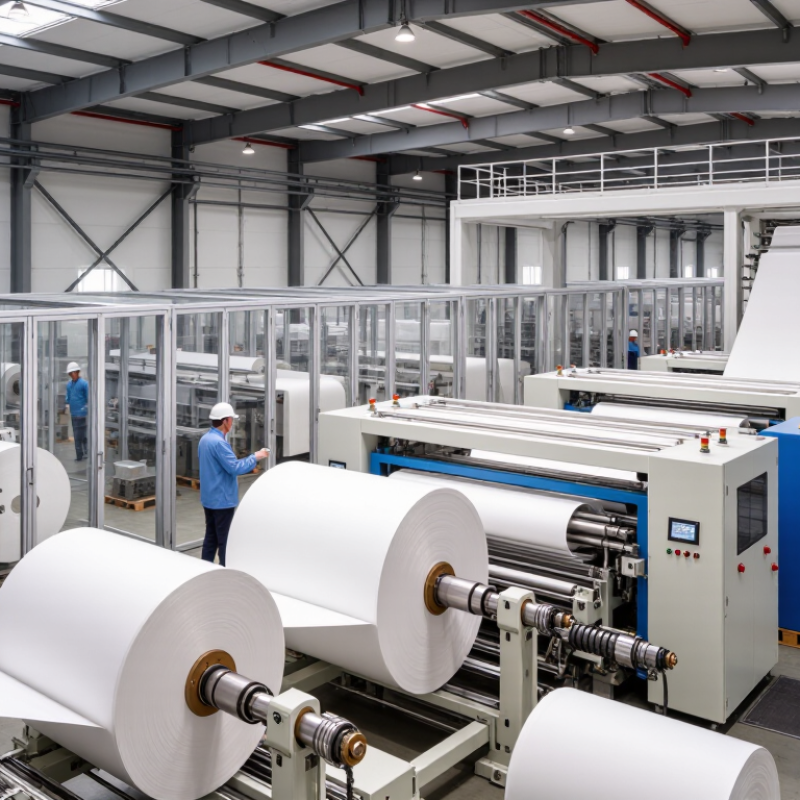
Why Choose Spunbond Nonwoven for Global Sourcing? The answer begins with performance, scale, and measurable supply-chain value. Spunbond Nonwoven is produced by extruding continuous filaments, laying them into a web, and bonding them thermally. This process creates consistent rolls with low lint, stable dimensions, and efficient material use. The result is practical. It is also highly adaptable.

Grand View Research estimated the global nonwoven fabrics market at approximately USD 53.5 billion in 2023, with continued growth expected through 2030. Smithers’ “The Future of Global Nonwovens to 2028” also identifies hygiene, filtration, construction, and automotive applications as major demand areas. These reports cover nonwovens broadly, not only spunbond grades. That distinction matters. Buyers should avoid treating every market forecast as a direct spunbond forecast. Still, the direction is clear: manufacturers need scalable, lightweight, and specification-driven materials.

Dr. Seshadri Ramkumar, a professor and recognized nonwovens specialist at Texas Tech University, has said, “Nonwovens are the fabrics of the future.” His observation reflects what sourcing teams see on factory floors: wide production lines, automated roll handling, and fast conversion into medical gowns, crop covers, packaging, and filtration media. Experienced buyers should verify basis weight, tensile strength, elongation, air permeability, bonding method, recycled content, and batch consistency. Price alone is a weak filter. Certification, testing records, delivery reliability, and technical support often decide the real cost. Spunbond Nonwoven is not automatically the best choice. It becomes compelling when product requirements, supplier capability, and regional logistics genuinely align.
Why Choose Spunbond Nonwoven for Global Sourcing?

What Spunbond Is: PP Fiber Diameters of 15–35 μm and Web Structure

Why Choose Spunbond Nonwoven for Global Sourcing?

Spunbond nonwoven is made by extruding molten polypropylene into continuous fibers. These fibers commonly measure 15–35 μm in diameter. They are spread into a loose web, then bonded with heat, pressure, or both. The result is a lightweight sheet with useful strength, consistent coverage, and clean handling. It feels soft, but it is not fragile.

The web structure matters more than fiber diameter alone. Even fiber distribution can improve tensile balance and reduce weak spots during cutting or packaging. A tighter web may offer better barrier performance, while an open web can support airflow. In sourcing work, buyers should check basis weight, tensile strength, elongation, air permeability, and bonding uniformity. Small changes can affect production results. The 15–35 μm range is not a guarantee of identical performance.

Tips: Request samples from several production lots. Compare the center and edge areas. Measure performance after folding, heat exposure, and storage. Ask for test methods, not only test numbers. A common mistake is choosing the lowest price before confirming web density and application needs. That decision may look efficient, but it can create waste later.
Production Variables: 10–250 g/m² Basis Weight and Thermal Bonding

Why Choose Spunbond Nonwoven for Global Sourcing?

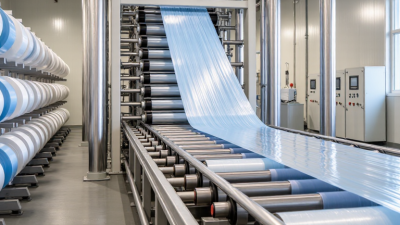
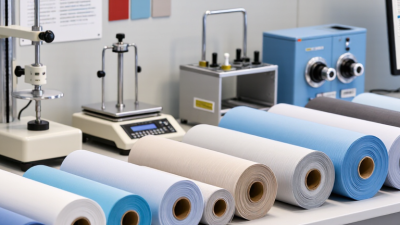
Production variables determine whether a spunbond fabric performs reliably across borders. Basis weight is the starting point. A 10–30 g/m² web feels light, flexible, and breathable, but it needs careful tension control during converting. At 100–250 g/m², the sheet offers greater coverage and stiffness. It also demands stronger winding and packaging systems. Small changes matter.

Thermal bonding connects the filaments through heat, pressure, and controlled dwell time. Point-bond calendering can create a smooth surface with defined strength and elongation. Through-air bonding may provide a softer structure when suitable bicomponent fibers are used. In production trials, I would check bonding temperature, line speed, roller pressure, and bond pattern together. One setting rarely fits the full 10–250 g/m² range. That assumption can become expensive.

Grand View Research estimated the global nonwoven fabrics market at about USD 53.5 billion in 2023, with continued growth forecast through 2030. Smithers’ The Future of Nonwovens to 2028 also identifies hygiene, medical, filtration, and construction as important demand areas. These reports support global sourcing, but they do not remove technical risk. Buyers should request basis-weight tolerance, tensile data, air permeability, shrinkage results, and batch samples. A heavier fabric is not automatically better. It may increase transport cost and reduce flexibility. The practical choice depends on end use, bonding stability, and repeatable inspection.

Why Choose Spunbond Nonwoven for Global Sourcing? - Production Variables: 10–250 g/m² Basis Weight and Thermal Bonding
Production Variable Practical Range or Setting Effect on Material Typical Sourcing Consideration Suitable Product Uses
Basis weight 10–250 g/m² Controls coverage, opacity, stiffness, strength per unit area, and material cost. Specify the target basis weight and allowable tolerance in the purchase specification; verify by standard mass-per-area testing. Lightweight hygiene layers, agricultural covers, packaging, medical gowns, filtration support, furniture interlining, and construction membranes.
Lightweight grade 10–25 g/m² Provides low material consumption and high softness, but generally has lower tear resistance and opacity. Best suited to applications where breathability and low cost are more important than high load-bearing capacity. Disposable hygiene components, lightweight protective covers, sachet wrapping, and agricultural row-cover layers.
Medium-light grade 26–60 g/m² Balances flexibility, coverage, air permeability, and handling strength. A versatile range for automated converting because it offers improved web integrity without excessive thickness. Medical apparel, protective packaging, crop protection, shopping bags, and backing materials.
Medium grade 61–120 g/m² Delivers greater opacity, dimensional stability, puncture resistance, and seam performance. Confirm roll width, winding hardness, and caliper because thicker webs can affect cutting, folding, and sealing performance. Reusable bags, mattress and furniture components, automotive trim support, filtration media support, and building wraps.
Heavy grade 121–250 g/m² Provides higher bulk, stiffness, tear strength, and barrier-support capability, with reduced drape and air flow. Consider roll diameter, container utilization, converting equipment limits, and the required balance between strength and flexibility. Geotextile layers, heavy-duty bags, furniture substrates, roofing underlayment, protective covers, and industrial composites.
Fiber-forming polymer Commonly polypropylene or polyester Influences melting behavior, chemical resistance, softness, temperature resistance, and end-use durability. Declare polymer type and additive package because polymer selection affects thermal bonding conditions and recycling considerations. Polypropylene is common for lightweight, moisture-resistant products; polyester is selected when higher temperature or dimensional stability is needed.
Thermal bonding method Calender bonding, point bonding, or through-air bonding Creates fiber-to-fiber cohesion and determines surface pattern, softness, tensile balance, thickness, and permeability. Request the bonding pattern, bonded-area percentage, and production direction because these variables affect feel and mechanical performance. Point bonding for controlled strength and appearance; through-air bonding for loft and softness; calender bonding for compact, stable webs.
Thermal bonding temperature Set around the polymer-specific softening or melting behavior Insufficient heat can cause weak bonding; excessive heat can flatten the web, reduce softness, or damage the surface. Use a validated process window rather than one universal temperature; the correct setting depends on polymer, line speed, pressure, and basis weight. Important for maintaining consistent strength, elongation, bulk, and appearance across international production lots.
Bonding pressure and nip loading Adjusted with roll gap, embossing pattern, and basis weight Changes bonded-area contact, caliper, surface texture, and the balance between tensile strength and softness. For quality control, compare bond uniformity across the full web width and monitor edge-to-center variation. Critical for bags, medical fabrics, protective apparel, and substrates that must withstand sewing, ultrasonic sealing, or lamination.
Line speed and web formation Determined by target basis weight, fiber throughput, and bonding capacity Affects fiber distribution, basis-weight uniformity, bonding consistency, and production output. Require sampling from the beginning, middle, and end of a production roll or lot to identify variation before shipment. Especially relevant to large-volume global sourcing programs where consistent converting performance is required.
Machine direction / cross direction balance Measured as MD and CD tensile strength and elongation Indicates how the web behaves during pulling, cutting, sewing, forming, and use. Define minimum MD and CD requirements instead of relying only on basis weight; spunbond webs can be directionally anisotropic. Handles, seams, medical gowns, packaging, geotextiles, and applications exposed to multidirectional loads.
Air permeability Application-dependent; generally decreases as basis weight, compaction, and bonded area increase Influences breathability, drying, filtration support, and pressure drop. Specify the test method and reporting units because results are not directly comparable across different test conditions. Hygiene products, apparel, medical fabrics, agricultural covers, and filtration support layers.
Roll width and winding Customized to converting equipment and shipment planning Affects trim waste, roll stability, storage efficiency, and container utilization. Confirm finished width tolerance, core diameter, maximum roll diameter, roll length, splice policy, and packaging format before production. All global sourcing programs, especially automated bag making, lamination, slitting, and high-speed cutting operations.
Quality-control checkpoints Basis weight, caliper, tensile strength, elongation, air permeability, appearance, and bonding uniformity Provides a measurable link between production settings and finished-roll performance. Use a documented specification, approved sample, lot traceability, and statistically representative sampling plan. Recommended for repeat orders, multi-country supply chains, and products requiring stable downstream processing.
Planning note: Actual performance varies with polymer type, fiber diameter, web formation, bonding pattern, additives, machine settings, and test method. Final specifications should be confirmed through a technical data sheet and a production-approved sample.

Performance Evidence: ISO 9073 and ASTM D5035 Test Requirements

Why Choose Spunbond Nonwoven for Global Sourcing?

Spunbond nonwoven offers consistent web formation, low lint, and efficient roll production. However, visual uniformity is not enough for responsible sourcing. Buyers need measurable evidence from controlled laboratory tests.

ISO 9073-3 evaluates tensile strength and elongation in nonwoven fabrics. It helps compare machine direction and cross direction performance. These results reveal whether the material can survive cutting, stitching, folding, or converting.

ASTM D5035 uses the strip method to measure fabric breaking force and elongation. The test applies a defined pulling speed and records failure under controlled conditions.

Sampling matters. A roll may perform differently near its edges, across its width, or between production lots. We therefore request specimens from multiple positions, not only from the most attractive section.

Small details matter here.

Test reports should identify conditioning, specimen size, direction, gauge length, and individual results. Average values alone can hide weak samples. A higher tensile number is not automatically better if softness or drape is required.

That is an easy mistake. In practical sourcing, we compare test data with the intended use and repeat testing after process changes.

ISO 9073 and ASTM D5035 provide credible frameworks, but they do not replace careful inspection. Some reports still lack enough sampling detail. That deserves a question, not blind acceptance.

Global Sourcing Math: MOQ, Lead Time, and PP Resin Cost per Kilogram

Why Choose Spunbond Nonwoven for Global Sourcing?

Spunbond sourcing becomes clearer when MOQ, lead time, and resin cost are calculated together. A practical order might require a 20,000-kilogram MOQ. At a PP resin cost of $1.10 per kilogram, resin represents about $22,000 before labor, energy, freight, and packaging. Add 3% process waste, and another 600 kilograms must be funded. Small losses become expensive quickly.

PP pricing is not stable. ICIS regional assessments during 2024–2025 showed commodity PP moving by roughly $100–200 per metric ton between nearby market periods. The World Bank Commodity Markets Outlook also placed average crude oil near $81 per barrel in 2024. Oil does not determine PP prices alone, but it signals feedstock risk. A supplier should quote resin separately and state the pricing date. Otherwise, comparisons may look cheaper than they are.

Lead time needs similar discipline. A realistic plan may include 10–14 production days, three days for inspection, and 5–10 days for inland delivery. Ocean transit remains separate. Industry demand continues to expand; Smithers’ nonwovens market research projects strong growth through 2029, increasing pressure on capacity. That makes a low MOQ attractive, but not always efficient. A 5,000-kilogram trial order may carry higher conversion costs and weaker freight economics.

The math is useful, but imperfect. Resin grades, scrap rates, payment terms, and port delays can change the final cost. The spreadsheet should be reviewed, not worshipped.

Responsible Buying: REACH, EN 13432, and ISO 9001 Supplier Records

Why Choose Spunbond Nonwoven for Global Sourcing?

Responsible buying starts with evidence, not attractive samples. Spunbond nonwoven offers stable basis weight, clean edges, and scalable production for packaging, hygiene, and industrial applications. Yet material consistency means little without compliance records. The OECD Global Plastics Outlook reported 353 million tonnes of plastic waste in 2019, while only 9% was recycled. That gap makes traceable purchasing increasingly important.

REACH should be checked as a regulatory obligation, not treated as a decorative certificate. Suppliers should provide current declarations, safety data, restricted-substance screening, and batch traceability. For compostable claims, EN 13432 requires controlled industrial conditions, including roughly 90% biodegradation within six months and disintegration within 12 weeks. Home composting is different. Confusion here can mislead buyers and end users.

ISO 9001 records can reveal how a supplier controls changes, complaints, inspections, and corrective actions. The ISO Survey 2023 recorded 1,265,216 ISO 9001 certificates worldwide, showing the standard’s broad industrial adoption. Still, certification alone cannot guarantee every roll is consistent. Ask for recent audit scope, test methods, production dates, and sample-based inspection results. I have found that small gaps matter: an outdated declaration, unclear resin origin, or missing lot number can delay an entire shipment. Good sourcing remains practical, documented, and open to review.

Why Choose Spunbond Nonwoven for Global Sourcing?

Responsible Buying: REACH, EN 13432, and ISO 9001 Supplier Records

These reference years show the regulatory or standard milestones buyers commonly review when evaluating spunbond nonwoven suppliers. Earlier or later dates do not indicate that one standard is more important than another.

Sources: European Chemicals Agency, REACH Regulation (EC) No 1907/2006; EN 13432:2000, Packaging—Requirements for packaging recoverable through composting and biodegradation; ISO 9001:2015, Quality management systems—Requirements.