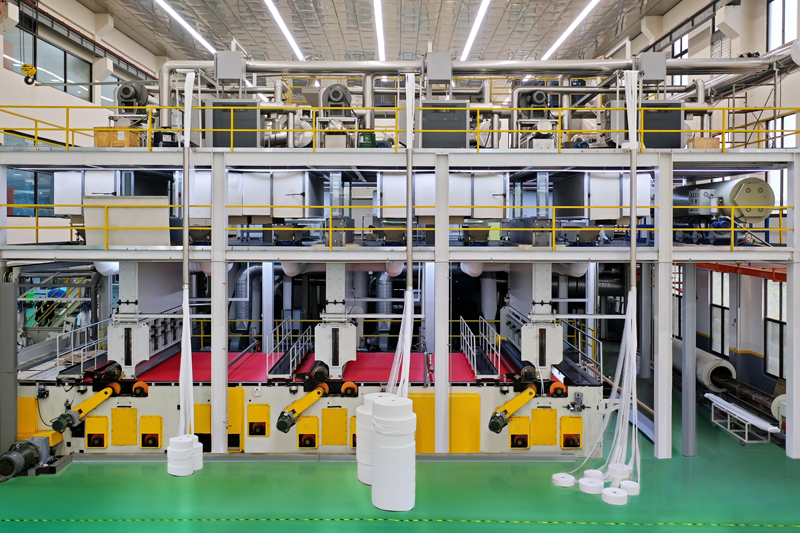
Advanced spunbond nonwoven machine for producing polypropylene fabrics
The basic working principle of the spunbond nonwoven machineis to convert polypropylene raw material pellets into a continuous fabric web without the traditional weaving process. First, molten polypropylene is extruded through a precision Spinneret to form an endless stream of filaments. These filaments are then drawn by a high-speed airflow and randomly laid onto a conveyor belt to form a uniform fabric web. The final step is a calibrated heat treatment that bonds the filaments together, solidifying their structure without compromising their breathability and softness.
A major advantage of modern spunbond Nonwoven fabric equipment is its ability to efficiently produce fabrics with exceptional performance. The resulting PP nonwoven fabric is highly breathable and resistant to abrasion and mechanical stress. The entire production process is designed to minimize waste and energy consumption, making it both cost-effective and aligned with broader sustainability goals in the manufacturing industry.
Due to these advantageous properties, the nonwoven fabrics produced are widely used in hygiene products such as diapers and feminine healthcare products, medical applications such as protective clothing and surgical drapes, and industrial uses such as geotextiles and packaging. The flexibility of the machine allows the operator to adjust the parameters to produce a variety of fabric weights and widths to meet the customer's precise specifications and performance requirements in different application areas.
Spunbond nonwoven machines are the backbone of modern nonwoven fabric production, enabling large-scale production of critical materials. Combining advanced engineering with process automation, these machines enable manufacturers to produce high-performance, stable, and cost-effective nonwoven fabrics that meet the evolving needs of numerous key industries.