Key Differences Between SMS and SMMS Nonwoven Machine Lines
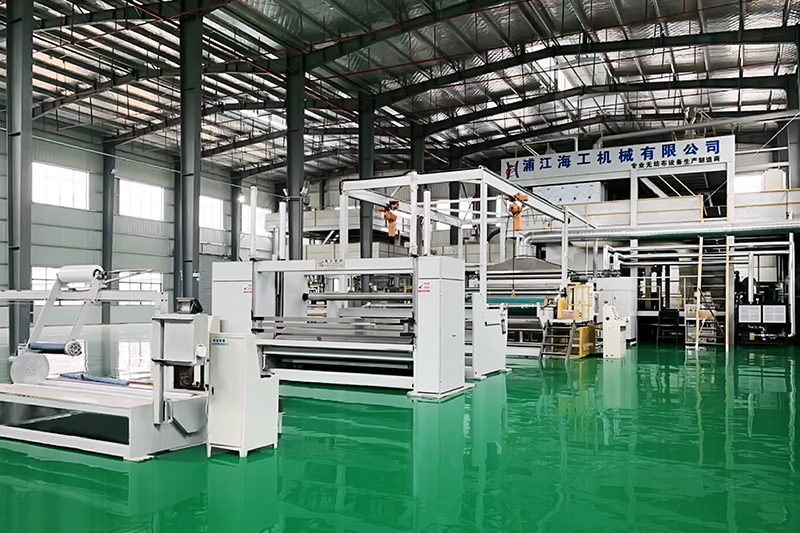
The fundamental divergence is embedded in the layering process and the physical setup of the nonwoven machine. An SMS line, denoting Spunbond-Meltblown-Spunbond, operates with three primary components: it spins a base layer of continuous filaments for strength, adds a central meltblown layer for fine filtration, and finishes with another spunbond layer. In contrast, an SMMS Nonwoven machine follows a Spunbond-Meltblown-Meltblown-Spunbond sequence. This requires an additional meltblown unit, making the machine line longer, more complex, and capital-intensive.
This architectural difference in the nonwoven machine directly dictates the functional properties of the final fabric. SMS fabrics offer an excellent balance of strength, liquid repellency, and softness, making them suitable for medical gowns and hygiene products. The SMMS structure, with its dual meltblown cores, creates a superior barrier against liquids, bacteria, and fine particles. This enhanced performance makes fabrics from an SMMS nonwoven machine ideal for high-risk medical environments requiring stringent isolation.
The choice between these machine lines is driven by end-product specifications and cost considerations. An SMS production line is a versatile and cost-effective solution for a broad market segment. For applications where barrier performance is the paramount and non-negotiable criterion, the advanced capabilities of an SMMS nonwoven machine justify its greater complexity and operational cost.
The core differences between SMS and SMMS technologies are rooted in their machine design and layering process. While SMS provides a robust and balanced output, SMMS delivers a premium barrier function. The decision ultimately hinges on whether the application requires a high-performance barrier or can be served effectively by a standard, more economical solution.