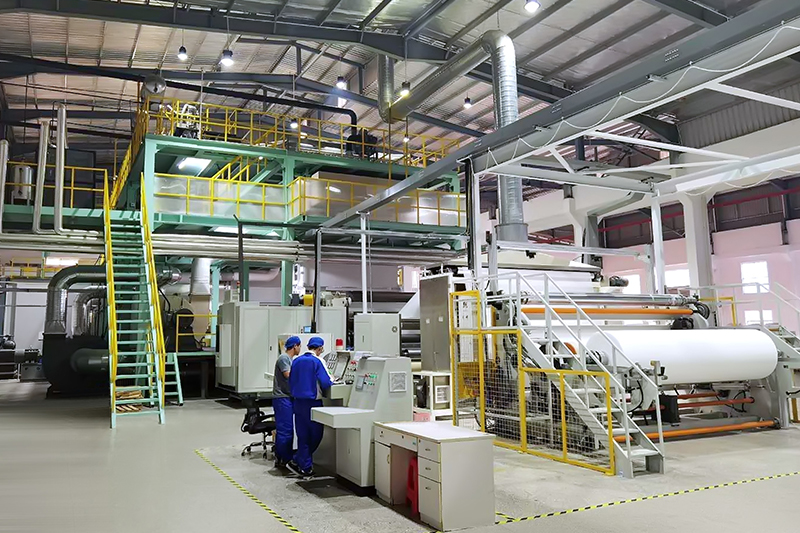
The Role of the Nonwoven Machine in Enabling Fabric Circularity
Material processing represents the first stage where nonwoven machinesdemonstrate circular capabilities. In spunbond operations, specifically, equipment can be configured to handle recycled polymer feedstocks. Advanced extrusion systems maintain stable processing conditions for recycled materials, while precision filtration removes impurities. This technical capability allows the production of consistent spunbond Nonwoven fabrics with significant recycled content, reducing dependency on virgin resources without compromising product performance.
The design flexibility of spun bond nonwoven machines further supports circular objectives. Through adjustable process parameters, manufacturers can engineer fabrics for enhanced durability and recyclability. In spunbond production, machines can optimize web formation and bonding to create monolithic structures that are easier to recycle than complex multi-material textiles. This approach to design-for-recycling, enabled by sophisticated machine controls, ensures that nonwoven fabrics can re-enter production cycles with minimal quality loss.
Process monitoring and data collection capabilities integrated into modern nonwoven machinesprovide essential support for circular systems. Sensors track material composition and production parameters throughout manufacturing, generating valuable data for lifecycle assessment. This information facilitates proper identification and sorting of materials at end-of-life, particularly important for Spunbond Fabrics where material consistency determines recyclability. The data infrastructure supports the development of closed-loop recycling protocols.
The evolution of nonwoven machine technology plays an indispensable role in advancing fabric circularity. Through their ability to process recycled materials, engineer recyclable products, and provide essential lifecycle data, these machines form the technical foundation for circular nonwoven systems. As equipment capabilities continue to advance, particularly in spunbond and related processes, nonwoven machines will remain crucial for developing truly sustainable textile production models that minimize waste and maximize resource efficiency.