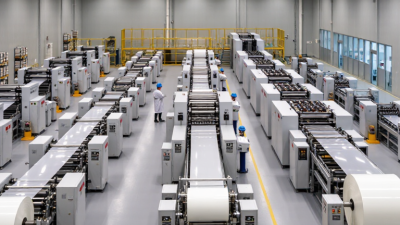
2026 Top Spunbond Nonwoven Line Buying Guide?
In 2026, purchasing a Spunbond Nonwoven Line requires more than comparing machine prices. Buyers must connect production capacity, fabric quality, energy use, and after-sales support. Smithers’ report, The Future of Global Nonwovens to 2028, projects continued global market growth toward approximately USD 67 billion by 2028. This expansion increases demand for efficient, stable, and adaptable production equipment.
Performance matters on the factory floor.
A modern line should be evaluated through actual operating details. These include output per hour, working width, fabric basis weight, filament denier, extrusion stability, and automatic tension control. Energy consumption per kilogram also deserves careful attention. A line producing 1,600 kilograms daily may appear attractive, but excessive heating losses can quietly reduce its margin. Grand View Research also identifies hygiene, medical, filtration, and geotextile applications as important nonwoven market segments. Each segment requires different strength, softness, uniformity, and compliance targets.
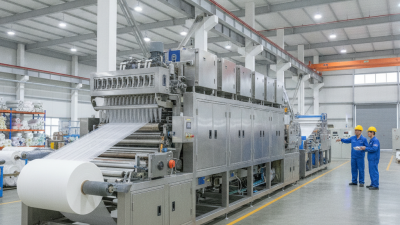
This guide examines those decisions from an engineering and purchasing perspective. It compares configuration options, control systems, spinning technology, online inspection, installation support, and maintenance access. The best choice is not always the fastest line. It should match the buyer’s resin supply, workforce skills, factory utilities, and target products. A spreadsheet may miss these realities. In practice, uneven web formation can reveal problems before laboratory tests do. That lesson is easy to overlook. Buyers should verify supplier data through factory demonstrations, sample testing, reference visits, and documented performance records. Reported capacity is useful, but repeatable capacity is more important.
What Is a Spunbond Nonwoven Line and How Does It Work?
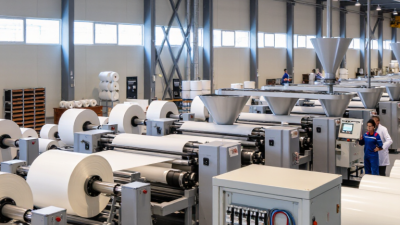
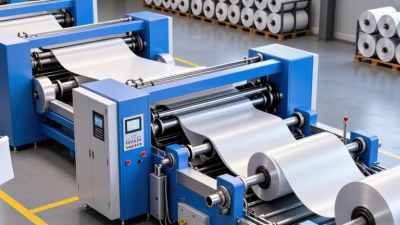
A spunbond nonwoven line converts thermoplastic polymer into continuous filaments, then forms those filaments into a bonded fabric. Unlike woven equipment, it uses no yarn interlacing. The process begins with polymer chips entering a heated extruder. Controlled melting matters because uneven temperature can create unstable pressure and weak fibers.
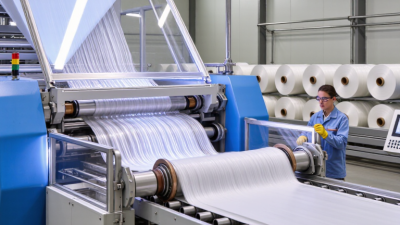
The melt passes through a metering system and spinning beam with many tiny holes. Filaments emerge downward in uniform streams. Cooling air solidifies them, while drawing air stretches and strengthens the fibers. The moving filaments land on a forming belt and create a loose web. This stage needs balanced airflow. Too much turbulence can produce thin areas.
The web then enters a bonding unit, often a heated calender with patterned and smooth rollers. Heat and pressure join selected fiber points without fully melting the sheet. A winding system controls tension and roll formation afterward. During production checks, operators usually monitor melt pressure, air temperature, belt speed, fabric weight, thickness, and tensile strength. Small setting changes can affect softness, elongation, and appearance.
It is not perfectly forgiving.
In practical line evaluations, the rated output should never be the only buying factor. Actual capacity depends on polymer quality, die width, maintenance habits, and product specifications. A line may run quickly but still deliver inconsistent fabric. That weakness can appear only after several hours. I would also examine startup waste, filter replacement access, electrical control stability, and operator training requirements before comparing equipment.
Which Spunbond Line Configurations Fit Your Material and Output Goals?
Choosing a spunbond line starts with your material, not the machine’s headline speed. Polypropylene usually needs stable melt filtration, precise extrusion, and uniform web forming. Recycled feedstock may require stronger filtration and wider process adjustment. For soft hygiene fabrics, a fine denier configuration can improve hand feel. For agricultural covers, higher basis weight and stronger bonding may matter more.
Output goals also change the line design. A narrow line can suit specialty rolls and frequent product changes. A wider line supports higher volume but demands better tension control, cooling, and winding accuracy. I have seen projects overestimate output while ignoring changeover time. That mistake can reduce real production for weeks.
Tips: Ask for trial data using your actual resin and target basis weight. Check edge trim, energy use, startup waste, and roll quality. Do not compare speed alone.
Consider spunbond, spunbond-meltblown-spunbond, or dual-beam configurations according to product function. Medical and filtration materials may need layered structures and tighter uniformity control. Heavy-duty fabrics may benefit from stronger bonding capacity and larger unwind systems. Confirm laboratory testing, operator training, and spare-part access before purchase. A technically impressive line can still disappoint if maintenance is complicated. Leave room for future materials, but avoid paying for unused flexibility. Sometimes, the simplest configuration performs better.
2026 Top Spunbond Nonwoven Line Buying Guide
Which Spunbond Line Configurations Fit Your Material and Output Goals?
The chart compares representative spunbond configurations using calculated hourly output. Output is based on
fabric width, line speed, basis weight, and an assumed operating efficiency:
Output = Width × Speed × Basis Weight × 60 × Efficiency ÷ 1,000.
These engineering scenarios are intended for preliminary line selection. Actual output depends on polymer type,
die design, filament formation, basis-weight range, start-up losses, maintenance, and product specifications.
How to Compare Capacity, Product Quality, and Energy Efficiency
Buying a spunbond line in 2026 requires more than comparing tonnes per day. Capacity figures often assume ideal polymer, stable operators, and continuous production. In practice, downtime changes the calculation. Compare usable output, not brochure output. Record uptime, changeover minutes, startup waste, and actual kilograms per hour across several weeks. Smithers’ The Future of Nonwovens to 2029 identifies hygiene, medical, and filtration applications as important growth areas, but each demands different speeds and material controls.
Product quality should be measured with repeatable data. Check basis-weight variation, tensile strength, elongation, web uniformity, and defect rates at several production speeds. A 15 gsm web may look acceptable on a roll, yet small weight fluctuations can affect softness and downstream converting. Ask for laboratory results from similar polymers and target weights. Request retained samples. Numbers without samples are weak evidence.
Energy efficiency deserves a normalized comparison. Use kilowatt-hours per kilogram, including extruders, spinning beams, cooling, compressors, and heating. The International Energy Agency reported that industry used about 37% of global final energy in 2022, making efficient motor systems and heat recovery commercially important. Review inverter control, insulation, standby consumption, and waste-heat reuse. A lower installed power rating does not always mean lower energy use. Maintenance condition matters too. I would leave room for doubt: supplier data may exclude auxiliaries or startup losses. Measure the complete line after installation, then compare it against the quoted baseline.
2026 Top Spunbond Nonwoven Line Buying Guide? - How to Compare Capacity, Product Quality, and Energy Efficiency
| Line Class |
Typical Effective Capacity
(t/day) |
Working Width
(mm) |
Typical Basis Weight
(g/m²) |
Mechanical Speed
(m/min) |
Typical Specific Energy
(kWh/kg) |
Basis-Weight Uniformity
(CV) |
Recommended Feedstock |
Best-Fit Application |
Typical Automation Level |
| Compact / Entry |
8–18 |
1,600–2,400 |
10–150 |
350–550 |
0.75–1.10 |
≤6% |
PP resin; optional recycled-content blend subject to filtration |
Packaging, agriculture, hygiene components |
Basic PLC, manual doffing, standard alarms |
| Standard Industrial |
18–35 |
2,400–3,200 |
10–180 |
450–650 |
0.60–0.85 |
≤5% |
Virgin PP; controlled additive and recycled-content options |
Medical disposables, hygiene, furniture, filtration support layers |
Automatic tension control, recipe storage, auto winder |
| High-Output Industrial |
35–55 |
3,200–4,800 |
10–200 |
550–750 |
0.48–0.70 |
≤4% |
High-flow PP with precise melt filtration |
Large-volume hygiene, construction, geotextile and industrial products |
Closed-loop control, automatic roll handling, online monitoring |
| Wide / Premium |
50–80+ |
4,800–6,400 |
10–250 |
650–900 |
0.40–0.60 |
≤3.5% |
High-quality PP with tightly controlled moisture and contamination |
Export-scale hygiene, medical and high-volume technical textiles |
Full line integration, predictive alarms, automated quality data collection |
Key Comparison Metrics for Supplier Evaluation
| Evaluation Dimension |
What to Request in the Technical Offer |
Practical Acceptance Target |
Why It Matters |
| Capacity |
Guaranteed output at a defined basis weight, width, speed and operating schedule |
Capacity calculated from saleable output, not only nameplate speed |
Actual production includes start-up waste, trim loss, downtime and roll changes |
| Product Quality |
Basis-weight profile, tensile strength, elongation, air permeability and visual defect limits |
Basis-weight CV of approximately 3.5–5% for standard production, depending on product grade |
Uniform web structure improves converting performance and reduces customer complaints |
| Energy Efficiency |
Measured electricity consumption per kilogram, including extruder, spinning, drawing, web forming and winding |
Approximately 0.40–0.85 kWh/kg for modern PP spunbond lines, depending on width and product |
Specific energy provides a fairer comparison than installed motor power alone |
| Material Utilization |
Trim recovery, start-up waste, filter-change loss and recycled-content limitations |
Documented waste rate and clearly defined reclaim procedure |
Lower waste reduces resin cost and improves environmental performance |
| Reliability |
Expected operating availability, preventive-maintenance intervals and critical spare-parts list |
Availability target of approximately 90–95% after commissioning, excluding planned maintenance |
Stable uptime directly affects effective daily capacity and delivery commitments |
| Factory Requirements |
Installed power, compressed-air demand, cooling-water requirements, floor area and clean-room conditions |
Verify utilities at the intended production rate, not at idle or test speed |
Utility limitations can prevent a line from reaching its rated performance |
Data note:
The figures above are indicative industry benchmark ranges for polypropylene spunbond lines. Actual performance varies with polymer grade, basis weight, working width, operating speed, product specification, ambient conditions, maintenance practices and the definition of effective capacity. Energy figures should be verified through a witnessed acceptance test using a consistent kWh/kg measurement boundary.
What Automation, Maintenance, and Safety Features Should Buyers Assess?
2026 Top Spunbond Nonwoven Line Buying Guide
What Automation, Maintenance, and Safety Features Should Buyers Assess?
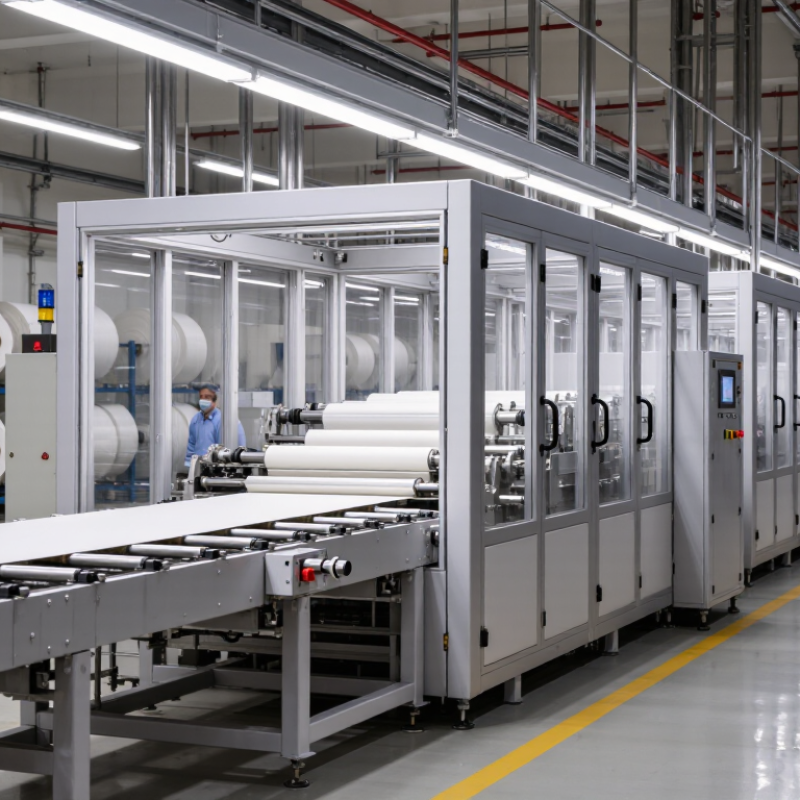
A modern spunbond nonwoven line should reduce operator guesswork, not remove human judgment. Assess automatic tension control, web-width adjustment, and real-time temperature monitoring. These systems help maintain stable output when polymer flow or room conditions change. Ask whether the control interface shows alarms clearly and stores production data for later review. A useful system records trends, not just sudden faults.
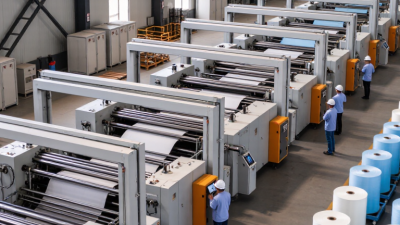
Maintenance design deserves equal attention. Inspect access doors, filter locations, lubrication points, and roll-change procedures during a factory visit. Tool-free access can shorten cleaning time, but only when guards remain secure. Check whether sensors support predictive maintenance through vibration, temperature, or runtime data. Request sample maintenance schedules and spare-part lists. They reveal practical ownership costs better than sales forecasts.
Safety features must be visible and testable. Look for emergency stops along the line, interlocked guarding, heat warnings, safe access platforms, and controlled restart functions. Confirm that safety circuits are documented and tested under applicable local requirements. Operators should reach controls without crossing moving equipment. Training materials should use clear instructions and realistic fault scenarios. No checklist is perfect. Buyers sometimes focus on automation screens while overlooking awkward cleaning tasks, poor lighting, or noise exposure. Those details can shape daily reliability more than impressive software.