How to Choose an SS Spun Bond Non Woven Machine 2026?
Choosing an Ss Spun Bond Non Woven Machine in 2026 requires more than comparing prices and production speed. The right decision begins with your product, raw material, factory space, and future orders. Polypropylene may suit common hygiene fabrics, while recycled or specialty polymers can demand tighter temperature control. Small details matter. A stable melt flow, accurate web formation, and reliable winding system can affect every roll leaving the factory.
Dr. Behnam Pourdeyhimi, a respected nonwoven technology specialist, offers a practical principle: “The application should drive the process choice.” That advice remains highly relevant. A machine producing 20 tons daily may look impressive, but it could be unsuitable for your required basis weight or fabric width. Check actual samples, not only brochures. Ask suppliers to demonstrate GSM consistency, tensile strength, elongation, and startup waste. Inspect the extruder, spinneret, drawing system, and electrical controls carefully.
Experience also teaches caution. A low purchase price can hide expensive maintenance, unstable output, or limited technical support. Spare parts availability matters. Operator training matters more than many buyers expect. Visit an operating factory, if possible, and observe noise, dust, temperature, and roll changes. Speak with the maintenance team, not only the sales representative.
No machine is perfect. Your first calculation may be wrong. Recheck energy consumption, labor costs, floor loading, and payback assumptions before signing. A reliable Ss Spun Bond Non Woven Machine should support consistent quality, safe operation, flexible production, and long-term service. In 2026, practical evidence should guide the investment—not marketing language alone.
Define the Production Needs for an SS Spun Bond Non Woven Machine
How to Choose an SS Spun Bond Non Woven Machine 2026?
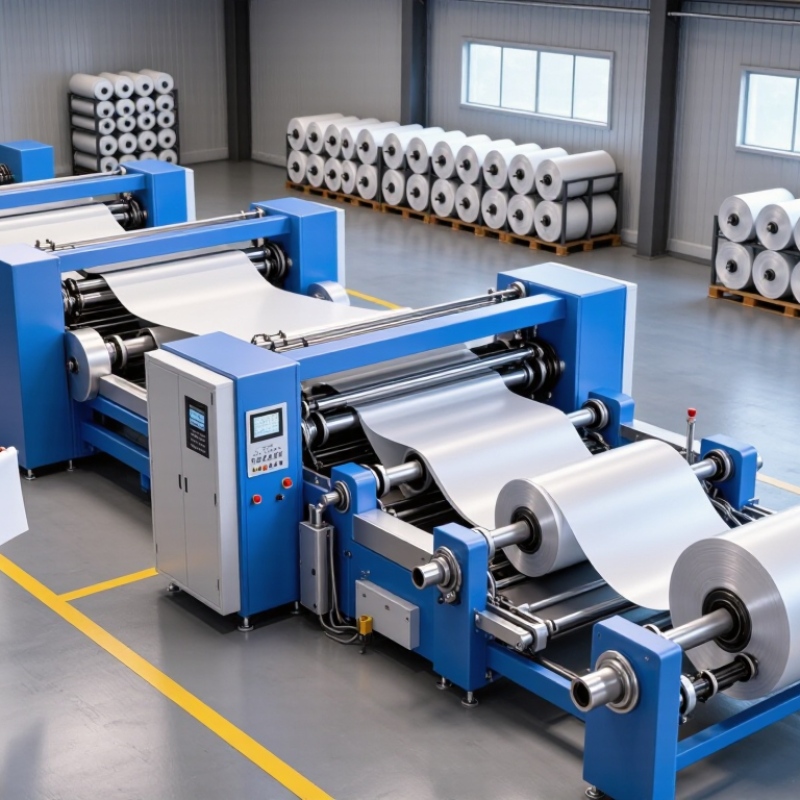
Define your production needs before comparing an SS spun bond non woven machine. Start with the target fabric width, GSM range, and daily output. A medical cover supplier may need light, uniform fabric, while a packaging producer may require stronger material. Confirm whether polypropylene is your main raw material. Then estimate future demand, not only current orders. An oversized line can consume capital and floor space unnecessarily.
Check the required speed, layer structure, heating method, and automation level. Ask for verified output under your intended GSM, rather than relying on maximum speed figures. Review power consumption, compressed air needs, cooling water, and installation space. Maintenance access matters too. Technicians need safe room around pumps, extruders, and winding units. Small details often decide whether production runs smoothly. I would leave extra capacity for growth, but not too much. My own estimates would remain flexible because market forecasts are rarely perfect.
Tips: Prepare three production scenarios: normal, peak, and low demand. Record acceptable GSM variation and roll weight limits. Request sample fabric from similar settings. Test tensile strength, softness, elongation, and appearance before purchase. Also inspect spare-part availability and operator training. A cheaper machine may become expensive when downtime, waste, and unfamiliar controls are included. Don’t ignore noise and heat. Workers notice them every shift.
How to Choose an SS Spun Bond Non Woven Machine in 2026?
Define the required product, fabric weight, working width, line speed, and operating efficiency before selecting an SS spun bond non woven machine. The chart shows estimated hourly output for common production needs using a 3.2–4.8 m working width and an 85% operating efficiency.
Planning formula: Estimated output = basis weight × working width × line speed × 60 × operating efficiency ÷ 1,000. Actual output may vary according to polymer type, filament denier, bonding temperature, maintenance, and product specifications.
Compare Machine Structure, Materials, and Spun Bonding Technology
Choosing an SS spun bond non woven machine in 2026 requires more than comparing output figures. Inspect the machine structure closely. A rigid steel frame reduces vibration around the spinneret and winding unit. Check access doors, insulation, screw design, and cleaning space before purchase. A compact layout may save floor area, but it can make maintenance uncomfortable.
Materials influence both stability and fabric quality. Stainless steel contact parts resist corrosion from polymers, cleaning agents, and humidity. Ceramic or hardened alloy components can improve wear resistance near high-temperature zones. Ask for documented temperature tolerance, surface treatment, and replacement intervals. Small details matter here. A weak bearing can stop production.
Spun bonding technology also deserves practical testing. Examine polymer melting control, filtration accuracy, airflow distribution, and web-forming uniformity. Stable airflow helps prevent thin edges, cloudy patches, and uneven strength. Compare single-beam and multi-beam configurations according to your target GSM range. Higher speed is not always better. It may increase waste when cooling or tension control is poorly matched. Request trial fabric made from your intended raw material, then measure GSM, tensile strength, elongation, and appearance. During factory inspections, record noise, temperature fluctuation, and operator access. Some specifications look impressive on paper. They can disappoint on the production floor. Leave room for adjustment, because real polymers rarely behave perfectly across every batch.
Evaluate Output Capacity, Fabric Quality, and Energy Efficiency
When choosing an SS spun bond non woven machine in 2026, evaluate usable output rather than advertised speed.
Grand View Research valued the global nonwoven fabrics market at about USD 53.45 billion in 2023. Its projected 7.4% annual growth increases pressure on stable, high-volume production. For a medium-width SS line, 400–800 kg per hour can provide a practical screening range. However, confirm this figure using your polymer type, basis weight, and working width. A machine producing 600 kg per hour at 40 gsm may behave differently at 15 gsm.
Fabric quality needs measurable proof.
Check basis-weight variation, tensile strength, elongation, filtration performance, and web uniformity across the full width. Ask for trial data, not photographs. EDANA’s European Nonwovens Statistics indicate annual regional production remains close to 3 million tonnes, showing how strongly converters depend on consistent materials. Small defects become expensive when production runs continuously. Inspect the die, spinnerets, suction system, bonding rollers, and online monitoring functions. Energy matters too. Record electricity consumption in kWh per kilogram during stable production, including auxiliaries and heating. A useful internal benchmark is 0.8–1.2 kWh/kg, but local conditions can change it. A spreadsheet can look convincing. It can still lie. Verify shutdown losses, warm-up time, compressed-air demand, and actual reject rates before signing technical specifications.
Calculate Total Investment, Operating Costs, and Long-Term Value
An SS spun bond non woven machine should be judged by total ownership cost, not purchase price alone. Ask for a detailed quotation covering the main equipment, dies, spare parts, installation, training, freight, and taxes. A low initial figure can hide expensive auxiliary systems. Include electrical panels, compressors, chillers, cooling water, and factory modifications. Record each cost in a spreadsheet. It makes weak assumptions visible.
Estimate operating cost per kilogram before comparing machines. Use expected output, actual running hours, electricity consumption, polymer price, labor, packaging, maintenance, and reject rate. For example, 800 kilograms per hour at 7,000 yearly hours produces 5.6 million kilograms before downtime. If electricity costs $0.09 per kilowatt-hour, measure the machine’s real load, not its catalog maximum. Add a conservative downtime allowance. Numbers are rarely perfect. That is the point. Measure it.
Long-term value depends on stable GSM, tensile strength, start-up waste, service response, and parts availability. Check whether local technicians can diagnose temperature, airflow, and web formation problems. Review warranty terms, maintenance intervals, and documented results from comparable production lines. Consider financing, depreciation, resale value, and future product changes. A machine saving 2% energy may matter less than one avoiding three days of stoppage. Request a sample run and inspect the fabric closely. Paper promises can be optimistic. Leave room for learning, because actual production will challenge the model.
How to Choose an SS Spun Bond Non Woven Machine 2026? — Calculate Total Investment, Operating Costs, and Long-Term Value
| Evaluation Area |
Planning Parameter |
Reference Value |
How to Use the Data |
| Machine type |
SS spunbond line |
Two-beam, polypropylene-based |
Suitable for common nonwoven applications such as hygiene, packaging, agriculture, furniture and medical-related products. |
| Usable fabric width |
Production width |
1,600 mm |
Confirm the finished-width requirement before selecting the die, web former and winding unit. |
| Typical production range |
Rated output |
80–120 kg/h |
Use the lower end for conservative financial planning; actual output varies with grammage, polymer grade, speed and uptime. |
| Practical operating output |
Average saleable output |
85 kg/h |
Calculated from 100 kg/h nominal output at 85% effective utilization. |
| Typical fabric weight |
Basis weight range |
10–150 g/m² |
Verify the machine’s stable operating range at the specific grammages required by customers. |
| Raw material |
Polymer feedstock |
PP resin, normally in pellet form |
Check melt-flow index compatibility, additive dosing, recycled-content requirements and local resin availability. |
| Electrical supply |
Industrial power system |
Three-phase; voltage and frequency to be confirmed |
Electrical design, transformer capacity and installation standards must match the production site. |
| Estimated specific electricity use |
Energy consumption |
0.70–0.90 kWh/kg |
Use 0.75 kWh/kg for the base-case calculation and verify the final figure during commissioning. |
1. Initial Investment Calculation — Base Case in USD
| Investment Item |
Quantity / Basis |
Estimated Cost |
Cost Inclusion |
| Two-beam SS spunbond production line |
1 set |
$780,000 |
Extrusion, spinning, web forming, bonding, electrical control and standard winding sections. |
| Auxiliary equipment |
1 package |
$92,000 |
Air compressor, chiller, cooling system, material loading and basic scrap handling. |
| Freight, insurance and inland delivery |
Planning allowance |
$48,000 |
Actual cost depends on origin, destination, shipment size, route and trade terms. |
| Installation and commissioning |
Technical service allowance |
$36,000 |
Mechanical installation, electrical connection, start-up support and operator training. |
| Factory preparation and utilities |
Site allowance |
$55,000 |
Floor preparation, ventilation, utility lines, lighting and production-area modifications. |
| Initial spare parts and laboratory tools |
Start-up package |
$24,000 |
Recommended wear parts, filters, heaters, sensors, gauges and basic quality-control instruments. |
| Pre-operating expenses and contingency |
Approx. 5% of listed items |
$52,000 |
Covers approvals, training, minor design changes and unforeseen start-up costs. |
| Total estimated initial investment |
Base case |
$1,087,000 |
Excludes land purchase, building acquisition, financing interest, taxes and working capital. |
2. Annual Production and Operating Cost Model
| Calculation Item |
Formula / Assumption |
Annual Result |
Planning Note |
| Scheduled operating hours |
20 hours/day × 300 days/year |
6,000 hours |
Allows time for planned maintenance, changeovers and holidays. |
| Effective production rate |
100 kg/h × 85% utilization |
85 kg/h |
Utilization includes stoppages, quality losses and routine adjustments. |
| Annual saleable production |
85 kg/h × 6,000 hours |
510,000 kg |
Equivalent to approximately 510 metric tonnes per year. |
| Polypropylene resin |
510,000 kg × $1.05/kg |
$535,500 |
Illustrative planning price; replace with a current local quotation and include additive use where applicable. |
| Electricity |
510,000 kg × 0.75 kWh/kg × $0.12/kWh |
$45,900 |
Actual cost depends on tariff structure, peak demand charges and line efficiency. |
| Direct labor |
12 production employees × $9,000/year |
$108,000 |
Illustrative loaded labor cost for three-shift coverage; adjust for local wages and staffing policy. |
| Maintenance and wear parts |
2.5% × $780,000 line cost |
$19,500 |
Includes routine servicing and commonly replaced components; major rebuilds are excluded. |
| Compressed air, cooling water and utilities |
Annual operating allowance |
$14,000 |
Includes water treatment, compressor service and utility-related consumables. |
| Packaging and roll handling |
510,000 kg × $0.035/kg |
$17,850 |
Includes wrapping, labels, cores and routine internal handling materials. |
| Quality control and consumables |
Annual allowance |
$8,000 |
Includes test materials, cleaning supplies, filters and production documentation. |
| Factory overhead |
Rent, insurance, administration and security |
$42,000 |
Excludes depreciation, loan interest, sales commissions and outbound freight. |
| Total annual operating cost |
Sum of listed operating costs |
$790,750 |
Base-case cash operating cost before depreciation, tax, financing and distribution expenses. |
| Estimated operating cost per kilogram |
$790,750 ÷ 510,000 kg |
$1.55/kg |
Use this figure as a starting point for pricing and sensitivity analysis. |
3. Long-Term Value and Financial Indicators
| Indicator |
Base-Case Method |
Reference Result |
Interpretation |
| Expected useful planning life |
Heavy industrial equipment |
10–15 years |
Actual life depends on maintenance quality, operating hours, spare-part availability and product mix. |
| Annual depreciation reference |
$1,087,000 ÷ 10 years |
$108,700/year |
Straight-line reference only; accounting treatment depends on local rules and residual value. |
| Annual output at 90% utilization |
100 kg/h × 6,000 hours × 90% |
540,000 kg |
Higher utilization reduces fixed cost per kilogram but requires reliable orders and maintenance planning. |
| Annual output at 70% utilization |
100 kg/h × 6,000 hours × 70% |
420,000 kg |
Lower utilization substantially increases the fixed-cost burden per kilogram. |
| Illustrative selling price |
Market-dependent planning assumption |
$1.85/kg |
Replace with confirmed customer quotations by fabric weight, color, treatment and order volume. |
| Illustrative annual revenue |
510,000 kg × $1.85/kg |
$943,500 |
Revenue is not guaranteed and should be tested against actual contracted demand. |
| Illustrative operating contribution |
$943,500 − $790,750 |
$152,750/year |
Before depreciation, tax, financing, distribution costs and working-capital changes. |
| Simple investment recovery period |
$1,087,000 ÷ $152,750 |
Approximately 7.1 years |
Use only as a screening indicator; the real result depends on selling price, uptime, financing and cash flow. |
| Break-even selling price |
$790,750 ÷ 510,000 kg |
$1.55/kg |
This is the operating-cost break-even level before depreciation, financing, taxes and profit margin. |
4. Sensitivity Analysis: Factors That Change Total Value
| Variable |
Lower Case |
Base Case |
Higher Case / Decision Impact |
| Effective utilization |
70% |
85% |
90% or more can improve unit economics, provided demand and maintenance capacity are sufficient. |
| Polypropylene price |
$0.90/kg |
$1.05/kg |
$1.20/kg increases annual resin cost by approximately $76,500 at 510 tonnes of output. |
| Electricity tariff |
$0.08/kWh |
$0.12/kWh |
$0.16/kWh increases the base-case annual electricity cost from about $45,900 to $61,200. |
| Specific electricity consumption |
0.70 kWh/kg |
0.75 kWh/kg |
0.90 kWh/kg adds approximately $9,180/year at a $0.12/kWh tariff and 510 tonnes of output. |
| Initial investment level |
$850,000 |
$1,087,000 |
$1,350,000 may be justified only when higher speed, automation, quality or product flexibility creates measurable value. |
| Changeover and downtime |
Low |
Planned |
Frequent color, grammage or product changes reduce saleable output and should be included in the capacity model. |
| Automation level |
Manual assistance |
Standard automation |
Additional automation may reduce labor and quality variation but increases capital cost and service requirements. |
Planning basis: All amounts are illustrative 2026 budgeting figures in USD and are intended for comparison before requesting supplier quotations. Actual costs vary by machine configuration, country, freight terms, taxes, utilities, labor rates, resin prices, product specifications and financing conditions. Land, building purchase, taxes, loan interest, outbound logistics, sales expenses and working capital are not included unless specifically stated.