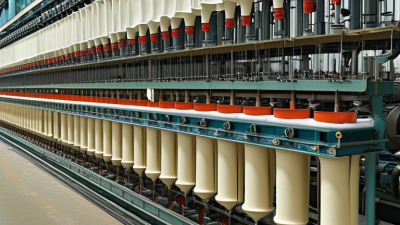
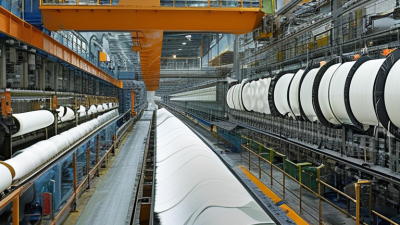
2026 How to Choose the Best Spunbonding Nonwoven Machine for Your Needs?
Choosing the right Spunbonding Nonwoven Machine is crucial for your production needs. With various options available, it can be overwhelming. Understanding key features will help you make an informed decision.
Consider your specific requirements. Different machines serve distinct purposes. Evaluate the type of materials you plan to use. Check the machine's capacity and speed. This will impact your output and efficiency.
Expert guidance may be beneficial. Consult with professionals in the field. Their experience can provide valuable insights. Don't rush your decision. A hasty choice can lead to future regrets. Emphasizing quality over cost will yield better long-term results.
Understanding Spunbonding Nonwoven Technology and Its Applications
Spunbonding nonwoven technology has gained significant traction due to its versatility and efficiency. The market for spunbond nonwoven materials is projected to reach approximately $3.7 billion by 2026, reflecting a compound annual growth rate (CAGR) of around 7.5%. These materials are widely used in medical, agricultural, and consumer applications, thanks to their lightweight and durable properties. The production process involves extruding polymer fibers, which are then laid out and bonded together, creating a strong fabric.
In medical settings, spunbond nonwoven fabrics serve essential functions. They are found in surgical gowns, masks, and drapes, providing barrier protection while remaining breathable. Agricultural applications also benefit from spunbond technology. The fabric acts as a protective cover for crops, promoting growth while shielding plants from pests and adverse weather. This adaptability makes spunbonding a go-to choice for various sectors.
Tips: When selecting a spunbonding machine, consider your production scale and the raw materials you will use. Conduct thorough research on the machine's specifications to ensure optimal performance for your intended application. Additionally, evaluate the supplier’s reputation to ensure reliability and support. Balancing quality and cost is crucial. Assess both short-term gains and long-term operational efficiency.
Understanding Spunbonding Nonwoven Technology and Its Applications
Key Factors to Consider When Selecting a Nonwoven Machine
When selecting a spunbonding nonwoven machine, several key factors are crucial. Understanding each component of the machine can significantly affect production efficiency. Reports indicate that equipment quality influences output by up to 30%. This shows that investing in reliable machinery pays off in the long run.
Evaluate the machine's capacity, which often ranges from 300 to 1500 kg per hour. Consider the fabric thickness as well. Thicker materials require more robust equipment. It's essential to assess the machine's adaptability. Flexibility in production can meet diverse market demands. However, this can introduce unnecessary complexity. Finding the right balance between flexibility and simplicity can be challenging.
Energy consumption stands out as another vital factor. Machines can consume 20-50% of their annual operating costs in energy alone. Choosing an energy-efficient model may increase the initial investment, but the savings over time can be substantial. Always look for up-to-date energy efficiency ratings and comparisons. This information can guide your decision-making process.
2026 How to Choose the Best Spunbonding Nonwoven Machine for Your Needs? - Key Factors to Consider When Selecting a Nonwoven Machine
| Dimension |
Value |
Importance (1-5) |
| Machine Speed |
200 m/min |
5 |
| Width Capability |
1600 mm |
4 |
| Power Consumption |
60 kW |
3 |
| Maintenance Frequency |
Monthly |
4 |
| Material Compatibility |
Polypropylene, Polyester |
5 |
| Automated Features |
Yes |
5 |
| Start-up Time |
30 minutes |
4 |
Assessing Production Capacity and Efficiency Requirements
When evaluating spunbonding nonwoven machines, production capacity is crucial. Manufacturers must assess their current and future output needs. According to a recent report by Smithers, the global nonwoven fabric market is expected to grow at a CAGR of 4.5% through 2026. This growth indicates that investing in a machine with higher capacity can be beneficial for meeting increasing demand.
Efficiency also plays a vital role when choosing a machine. The latest machines can achieve production speeds of up to 200 meters per minute. However, efficiency is not solely about speed. It's essential to consider material waste, energy consumption, and maintenance ease. High efficiency means lower costs and higher profit margins over time.
Tips: Determine your production goal and match it with machine specifications. Consider machines that offer flexibility for different fabric types. Analyze energy usage to enhance sustainability in your operations. A well-rounded approach leads to better long-term decisions in your machinery investments. Remember, not all machines may fit your unique needs. Reflect on your current setup and be open to adjusting your expectations.
Evaluating Machine Features and Technological Advancements
When evaluating spunbonding nonwoven machines, technological advancements are key. Machines with improved
energy efficiency can reduce operational costs significantly. According to a recent industry report, manufacturers can achieve
energy savings of up to 30% with the latest technology. Investing in equipment that integrates automation helps streamline production,
leading to a boost in output.
Consider the machine's adaptability. The versatility of a spunbonding machine determines its ability to handle various materials and thicknesses. Current models can process a
wider range of polymers, enhancing product offerings. Paying attention to the machine’s operational speed is crucial too. High-speed machines can output up to
600 meters per minute, but ensure they maintain quality over speed.
Tip: When choosing a machine, assess the warranty and support services. A strong support system can mitigate downtime risks.
Additionally, verify that the machine complies with environmental regulations. Technology continues to evolve, and staying updated can prevent investment in outdated machinery.
Sometimes, compromises on features can lead to unexpected operational challenges.
Budgeting and Cost-Effectiveness in Machine Selection
When selecting a spunbonding nonwoven machine, budgeting is crucial. The initial purchase cost is just one part of the equation. Operating costs, maintenance, and energy consumption often sneak up over time. Consider both direct and indirect expenses when making your decision.
Understanding your production requirements helps in cost-effectiveness. A machine with higher output may seem attractive, but is it truly necessary? Assessing your actual needs could prevent overspending. It is essential to think about flexibility and scalability as well. A less expensive machine might limit future growth.
Investing time in research is key. Explore various suppliers and technologies available in the market. Take note of real user experiences, as they can provide insights beyond specifications. A machine might look perfect on paper but may have hidden weaknesses. Engaging with professionals in the industry could unearth valuable tips and alternatives that align with both quality and budget.