What Is SSS Nonwoven Fabric and How Is It Used?
Sss Nonwoven Fabric sits at the intersection of material science, manufacturing efficiency, and everyday product design. Unlike woven textiles, it forms a bonded web of fibers through mechanical, thermal, or chemical processes. The three-layer spunbond structure can improve strength, softness, and barrier performance. You may find it inside medical gowns, hygiene products, filtration media, agricultural covers, and durable packaging.
Industry data shows why this material deserves closer attention. Smithers’ nonwovens market studies forecast continued global growth through 2029, driven by healthcare, construction, filtration, and personal-care demand. EDANA reported that European nonwoven production exceeded three million tonnes in 2023, despite economic pressure and weaker industrial consumption. These figures suggest scale, but they do not guarantee quality. Fiber selection, bonding temperature, basis weight, and testing methods still determine real-world performance.
Dr. Behnam Pourdeyhimi, a leading nonwovens researcher, has explained, “Nonwovens are engineered materials, not simply low-cost substitutes for woven fabrics.” That distinction matters. A thin Sss Nonwoven Fabric may feel light in the hand, yet its layered construction can manage tensile loads or block fine particles. The opposite can also happen. A product may look uniform but fail after moisture, heat, or repeated flexing. This article examines what Sss Nonwoven Fabric is, how manufacturers produce it, and where its advantages become practical. The industry is advancing quickly, although some claims still require better independent testing.
What Is SSS Nonwoven Fabric?
What Is SSS Nonwoven Fabric?
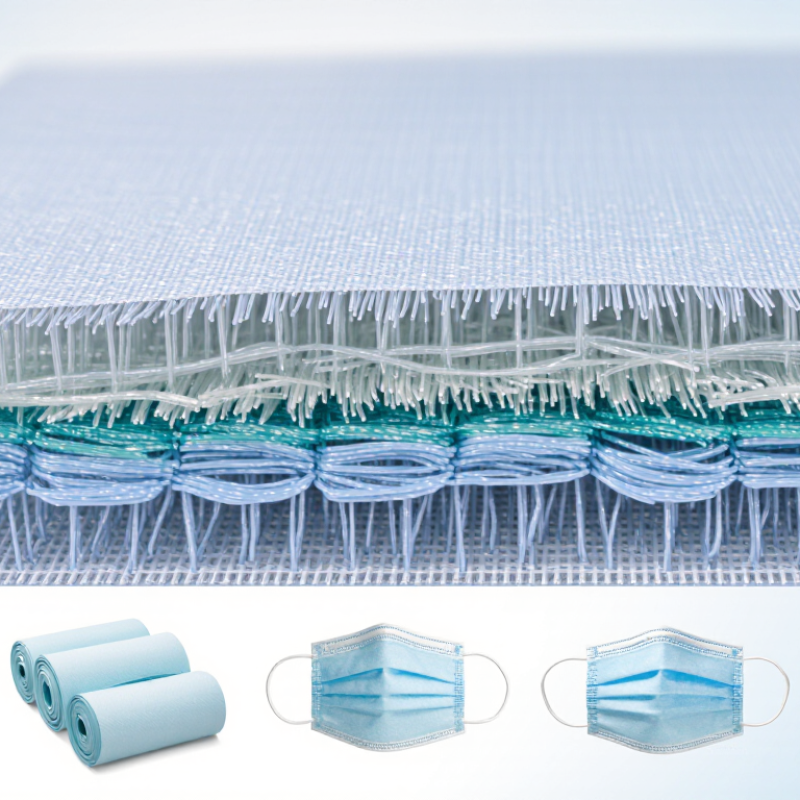
SSS nonwoven fabric is made from three spunbond layers. “SSS” means spunbond, spunbond, spunbond. Polymer resin is melted, stretched into continuous filaments, and laid into three web layers. Heat or pressure then bonds the layers together. Unlike woven fabric, it has no yarn system or traditional weaving pattern.
This structure gives SSS fabric a useful balance of softness, strength, and air permeability. It is often produced from polypropylene, although the exact material can vary. Common applications include disposable hygiene products, protective garments, medical packaging, shopping bags, agricultural covers, and household liners. Its surface can feel smooth, while its lightweight construction supports efficient production. However, SSS fabric is not automatically waterproof or highly protective. Performance depends on weight, fiber size, bonding strength, additives, and testing conditions. That distinction matters.
Tips: Check the fabric weight before selecting it. Higher weight may improve strength, but it can reduce softness and airflow. Ask for test data covering tensile strength, air permeability, liquid resistance, and cleanliness. In real production, edge tearing and uneven bonding can still occur. Small samples should be checked under bending, stretching, and moisture exposure. No fabric is perfect. A specification sheet helps, but practical testing may reveal issues that laboratory numbers miss.
How Is SSS Nonwoven Fabric Manufactured?
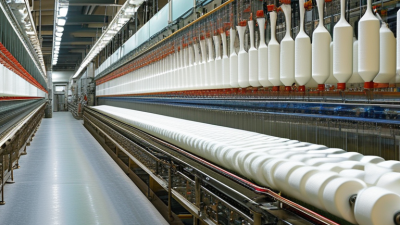
SSS nonwoven fabric usually contains three spunbond layers. The name describes the production sequence: spunbond, spunbond, and spunbond. Manufacturing starts with thermoplastic polymer pellets, commonly polypropylene. Pellets are heated until they become a stable melt. A fine filter removes contaminants before the melt reaches the spinnerets. These small openings form continuous filaments. The melt cools quickly. Controlled air stretches the filaments as they move downward. Moving belts collect them into a loose web. Three web-forming stages build the characteristic SSS structure. Layer alignment matters. Uneven feeding can create thin areas and weak edges.
The stacked web then passes through a heated calender. Pressure and heat bond selected points without weaving the fibers. Roll patterns can influence softness, strength, air permeability, and surface appearance. Producers adjust temperature, line speed, and pressure for different applications. In practice, this control is not perfect. Operators check basis weight, thickness, tensile strength, elongation, and bonding consistency. These measurements reveal problems that visual inspection may miss. After bonding, the fabric is cooled, slit, and wound into rolls. Converters may cut or laminate it for masks, medical gowns, filters, hygiene products, or packaging. Not every SSS fabric performs alike. Fiber diameter, additives, bonding patterns, and storage conditions can change performance. A practical specification should match the fabric with its intended use.
What Properties Define SSS Nonwoven Fabric?
What Properties Define SSS Nonwoven Fabric?
SSS nonwoven fabric contains three spunbond layers, usually made from polypropylene. Each layer is formed from continuous filaments and thermally bonded. This structure gives the fabric good tensile strength, stable dimensions, and consistent surface coverage. It also produces low lint and moderate softness. However, “three layers” does not automatically mean superior performance.
Basis weight strongly influences handling and strength. Common production ranges sit around 10–80 gsm, depending on the application. Smithers’ The Future of Nonwovens to 2028 reports that the global nonwoven market could grow from about $53.5 billion in 2023 to $67.6 billion by 2028. This growth reflects demand for lightweight, efficient materials. SSS fabrics support that trend through low material usage and continuous production.
Air permeability, elongation, tear resistance, and hydrostatic pressure are practical quality indicators. Testing should follow recognized methods from ISO, ASTM, or EDANA. In factory inspections, uneven bonding may appear as thin stripes, stiff patches, or weak edges. These defects can affect cutting and converting. SSS fabric also lacks the fine filtration layer found in some composite structures. That limitation matters. A stronger fabric is not always a better barrier. The correct choice depends on softness, breathability, strength, and liquid resistance. for evaluation.
What Is SSS Nonwoven Fabric and How Is It Used?
SSS nonwoven fabric is made from three spunbond layers formed from continuous thermoplastic filaments and bonded with heat. Its defining properties include low weight, good tensile strength, softness, breathability, and uniform structure. The chart shows representative basis-weight ranges commonly selected for different applications; the actual specification depends on product design and required performance.
What Are the Benefits and Limitations of SSS Nonwoven Fabric?
SSS nonwoven fabric
is made from three spunbond layers, usually formed from polypropylene filaments. Heat bonds these layers without weaving or knitting. The result is a light sheet with a fairly even surface, useful in hygiene products, protective gowns, packaging, and agricultural covers. It feels soft. That matters in skin-contact applications.
Its main benefit is a useful balance between strength, softness, and production cost. The layered structure can improve tear resistance and surface uniformity compared with a single spunbond layer. It also allows air and water vapor to pass through, helping reduce heat buildup. Manufacturers can adjust thickness, color, and bonding patterns for different uses. In practical material assessments, consistent basis weight is important because thin areas may fail early.
However, SSS fabric is not automatically waterproof or sterile. Liquid resistance usually requires coating, lamination, or additional treatment. Those additions can reduce breathability and change the hand feel. The material may also lose strength under prolonged sunlight or excessive heat. It can generate static electricity, and its performance varies with filament quality and bonding conditions. This is sometimes overlooked.
Another limitation involves environmental handling. Polypropylene can be recyclable, but mixed laminates, dyes, and contamination may make recycling difficult. I would not treat every SSS grade as interchangeable. Product data should include tensile strength, hydrostatic pressure, air permeability, and intended-use testing. A cheaper roll may look similar, yet perform poorly at seams or under repeated stress. That difference becomes obvious during actual use.